
 The Hong Kong University of Science and Technology (Guangzhou campus)
I am a Human-Computer Interaction (HCI) and design researcher, currently pursuing a Ph.D. candidate in the Computational Media and Arts Thrust, Information Hub, at The Hong Kong University of Science and Technology (Guangzhou), supervised by Prof. David Yip and Prof. Anca-Simona Horvath. I am a member of the Creative Art Tech (CAT) Research Team and the Art, Technology, Architecture (@A) Research Group.
My research focuses on Human-Centered Computing, aiming to understand and model how technology shapes human behavior and societal dynamics. I am particularly interested in interactive AI for digital cultural heritage, including AIGC-enabled experiences for heritage interpretation, storytelling, and preservation.
My research has appeared in premier HCI journals and conference proceedings, including Ubicomp, CHI, CSCW, IUI, and DIS. My art and design work has been featured in exhibitions such as ISEA, VINCI, CAA and CAFA.
Education
-
HKUST(GZ)Ph.D. Student.Sep. 2024 – Jul. 2027 (expected)
-
HKUSTM.Phil.Sep. 2022 - Jul. 2024
-
 Central Academy of Fine ArtsB.S. in Information DesignSep. 2016 - Jul. 2019
Honors & Awards
-
🏆 Postgraduate Studentship (PGS) Award2024
-
🏆 Postgraduate Studentship (PGS) Award2022
-
🏆 Outstanding Graduate of Beijing2019
-
🏆 Outstanding Graduate of CAFA2019
News
Selected Publications (view all )
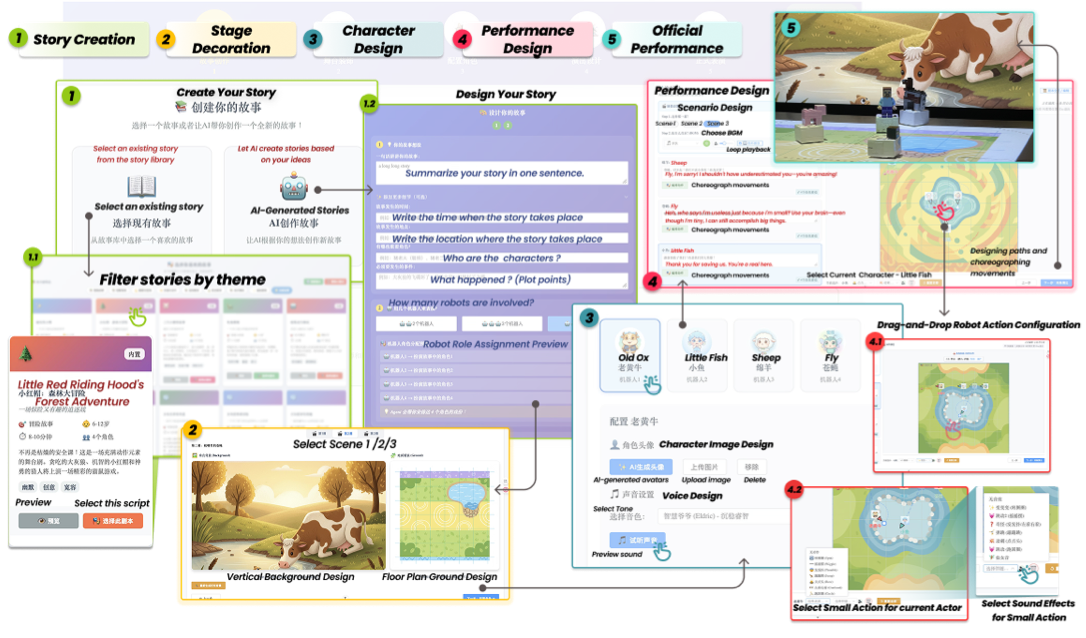
CoStage: An Embodied AI Co-Creation System for Children’s Performative Storytelling with Robots
Junrong Song*, Huanyi Wan*, Lei HAN, Yinghao Gao, David Yip, Xin Tong (* equal contribution)
Proceedings of the 2026 Designing Interactive Systems Conference (🇸🇬 DIS ’26) 2026
We present CoStage, an AI-supported embodied co-creation platform that combines LLM-based story generation with multi-robot stage performance to support children's storytelling and spatial imagination. By enabling children to direct robot actors on a tangible 360° stage, CoStage transforms written stories into embodied performances. A within-subjects study (N = 24) showed that robot enactment increased immersion, enhanced directorial agency, supported spatial understanding, and encouraged iterative storytelling. Our findings highlight the potential of embodied AI co-creation for fostering children's narrative engagement and spatial cognition.
CoStage: An Embodied AI Co-Creation System for Children’s Performative Storytelling with Robots
Junrong Song*, Huanyi Wan*, Lei HAN, Yinghao Gao, David Yip, Xin Tong (* equal contribution)
Proceedings of the 2026 Designing Interactive Systems Conference (🇸🇬 DIS ’26) 2026
We present CoStage, an AI-supported embodied co-creation platform that combines LLM-based story generation with multi-robot stage performance to support children's storytelling and spatial imagination. By enabling children to direct robot actors on a tangible 360° stage, CoStage transforms written stories into embodied performances. A within-subjects study (N = 24) showed that robot enactment increased immersion, enhanced directorial agency, supported spatial understanding, and encouraged iterative storytelling. Our findings highlight the potential of embodied AI co-creation for fostering children's narrative engagement and spatial cognition.
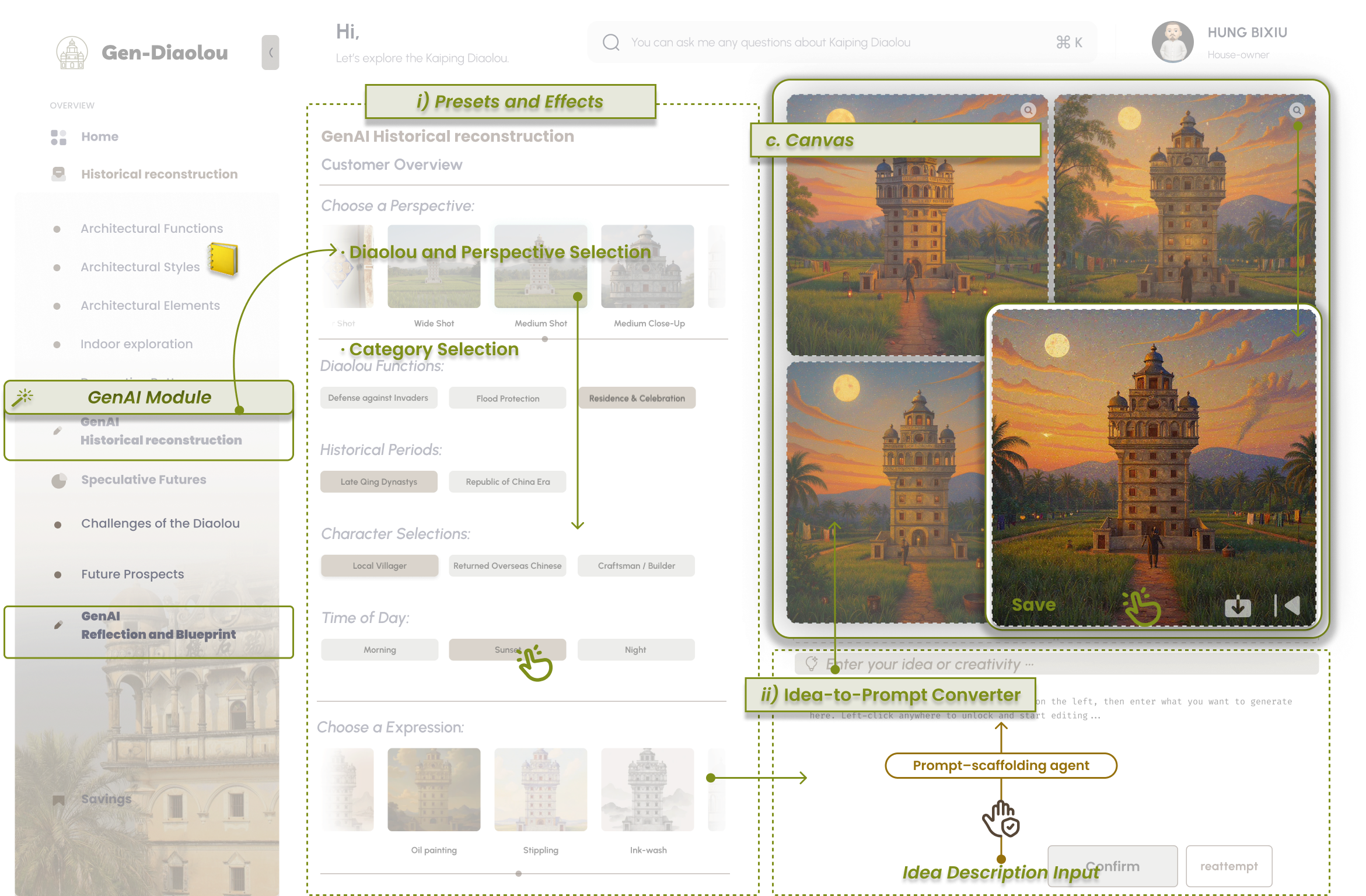
Gen-Diaolou: An Integrated AI-Assisted Interactive System for Diachronic Understanding and Preservation of the Kaiping Diaolou
Lei HAN, Yi GAO, Xuanchen LU, Bingyuan WANG, Lujin ZHANG, Zeyu WANG, David Yip
Proceedings of the 2026 CHI Conference on Human Factors in Computing Systems (🇪🇸 CHI 26‘) 2026
This research explores how AI-assisted interactive systems can support architectural heritage understanding and preservation. Focusing on the UNESCO World Heritage site Kaiping Diaolou and Villages, we conducted a formative study (N=14) to identify challenges and opportunities for AI in heritage engagement. Based on these insights, we designed Gen-Diaolou, an AI-assisted system for heritage learning and preservation awareness. Findings from a pilot study (N=18) and a museum field study (N=26) suggest that Gen-Diaolou can enhance visitors' understanding of heritage evolution and promote preservation awareness, offering design implications for future human–AI collaboration in digital cultural heritage.
Gen-Diaolou: An Integrated AI-Assisted Interactive System for Diachronic Understanding and Preservation of the Kaiping Diaolou
Lei HAN, Yi GAO, Xuanchen LU, Bingyuan WANG, Lujin ZHANG, Zeyu WANG, David Yip
Proceedings of the 2026 CHI Conference on Human Factors in Computing Systems (🇪🇸 CHI 26‘) 2026
This research explores how AI-assisted interactive systems can support architectural heritage understanding and preservation. Focusing on the UNESCO World Heritage site Kaiping Diaolou and Villages, we conducted a formative study (N=14) to identify challenges and opportunities for AI in heritage engagement. Based on these insights, we designed Gen-Diaolou, an AI-assisted system for heritage learning and preservation awareness. Findings from a pilot study (N=18) and a museum field study (N=26) suggest that Gen-Diaolou can enhance visitors' understanding of heritage evolution and promote preservation awareness, offering design implications for future human–AI collaboration in digital cultural heritage.
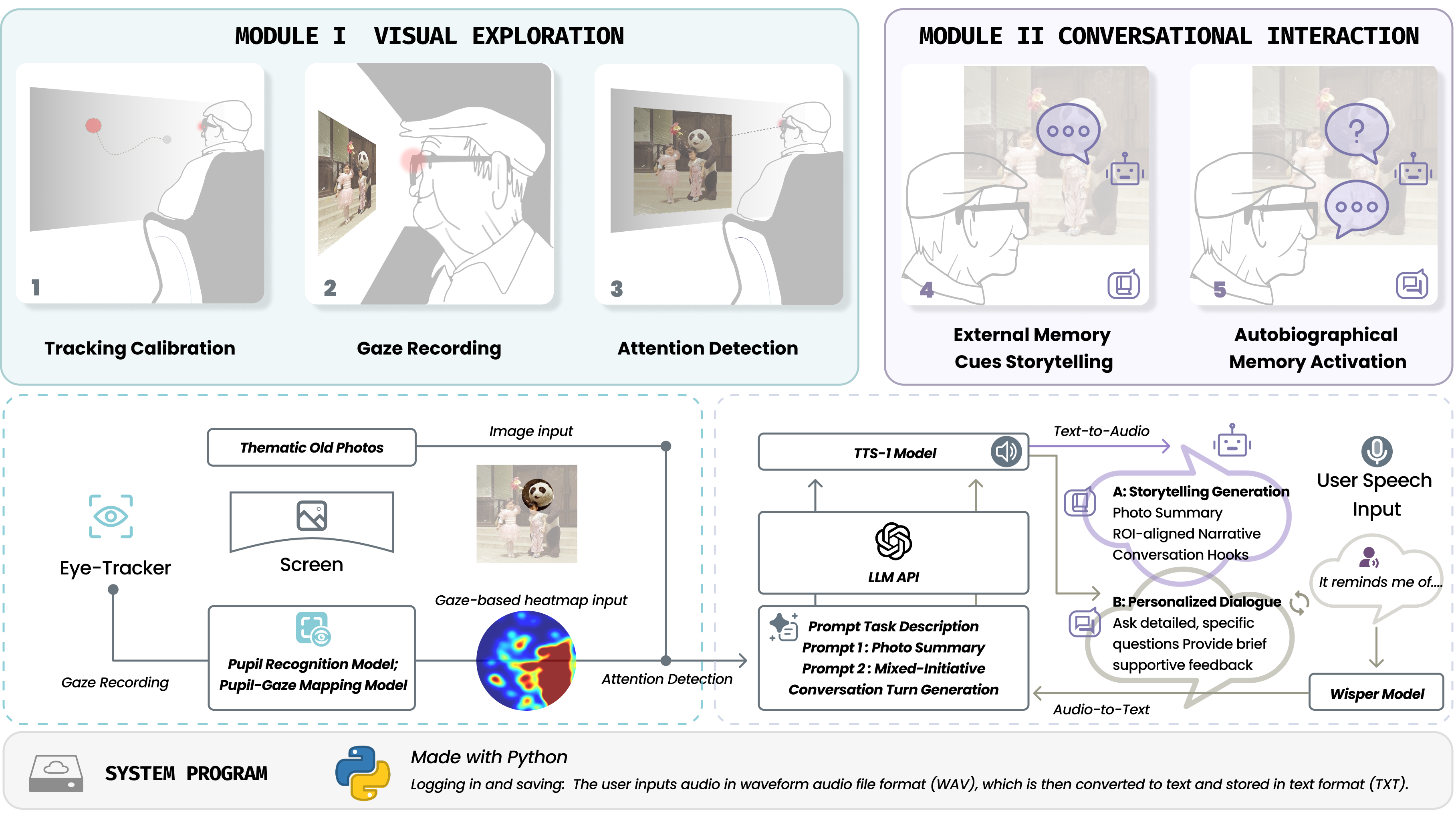
Eye2Recall: Exploring the Design of Enhancing Reminiscence Activities via Eye Tracking-Based LLM-Powered Interaction Experience for Older Adults
Lei HAN, Mingnan WEI, Qiongyan CHEN, Anqi WANG, Kefei LIU, Rongrong CHEN, David Yip
Proceedings of the 2026 The Annual ACM Conference on Intelligent User Interfaces (🇨🇾 IUI 26‘) 2026
We present Eye2Recall, an LLM-powered reminiscence system that combines eye tracking and natural language interaction to support older adults' photo-based reminiscence. Informed by expert interviews, the system uses gaze to identify visual interests and facilitate mixed-initiative conversations. A user study with ten older adults suggests that Eye2Recall can provide a more natural and engaging reminiscence experience, offering insights for the design of accessible AI-supported technologies for positive aging.
Eye2Recall: Exploring the Design of Enhancing Reminiscence Activities via Eye Tracking-Based LLM-Powered Interaction Experience for Older Adults
Lei HAN, Mingnan WEI, Qiongyan CHEN, Anqi WANG, Kefei LIU, Rongrong CHEN, David Yip
Proceedings of the 2026 The Annual ACM Conference on Intelligent User Interfaces (🇨🇾 IUI 26‘) 2026
We present Eye2Recall, an LLM-powered reminiscence system that combines eye tracking and natural language interaction to support older adults' photo-based reminiscence. Informed by expert interviews, the system uses gaze to identify visual interests and facilitate mixed-initiative conversations. A user study with ten older adults suggests that Eye2Recall can provide a more natural and engaging reminiscence experience, offering insights for the design of accessible AI-supported technologies for positive aging.
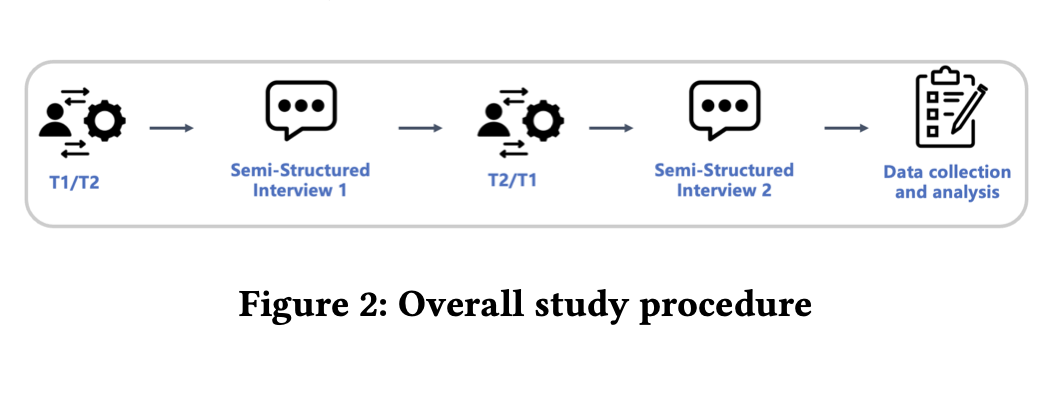
Pinning “Reflection” on the Agenda: Investigating Reflection in Human–LLM Co-Creation for Creative Coding
Anqi Wang, Zhizhuo Yin, Yulu Hu, Yuanyuan Mao, Lei HAN, Tong Xin, Keqing Jiao, Pan Hui
Proceedings of the 2025 Conference on Computer-Supported Cooperative Work and Social Computing (🇳🇴 CSCW 25‘) 2025
Large language models (LLMs) are increasingly integrated into creative coding, yet how users reflect, and how different co-creation conditions influence reflective behavior, remains underexplored. This study investigates situated, moment-to-moment reflection in creative coding under two prompting strategies: the entire task invocation (T1) and decomposed subtask invocation (T2), to examine their effects on reflective behavior. Our mixed-method results reveal three distinct reflection types and show that T2 encourages more frequent, strategic, and generative reflection, fostering diagnostic reasoning and goal redefinition. These findings offer insights into how LLM-based tools foster deeper creative engagement through structured, behaviorally grounded reflection support.
Pinning “Reflection” on the Agenda: Investigating Reflection in Human–LLM Co-Creation for Creative Coding
Anqi Wang, Zhizhuo Yin, Yulu Hu, Yuanyuan Mao, Lei HAN, Tong Xin, Keqing Jiao, Pan Hui
Proceedings of the 2025 Conference on Computer-Supported Cooperative Work and Social Computing (🇳🇴 CSCW 25‘) 2025
Large language models (LLMs) are increasingly integrated into creative coding, yet how users reflect, and how different co-creation conditions influence reflective behavior, remains underexplored. This study investigates situated, moment-to-moment reflection in creative coding under two prompting strategies: the entire task invocation (T1) and decomposed subtask invocation (T2), to examine their effects on reflective behavior. Our mixed-method results reveal three distinct reflection types and show that T2 encourages more frequent, strategic, and generative reflection, fostering diagnostic reasoning and goal redefinition. These findings offer insights into how LLM-based tools foster deeper creative engagement through structured, behaviorally grounded reflection support.
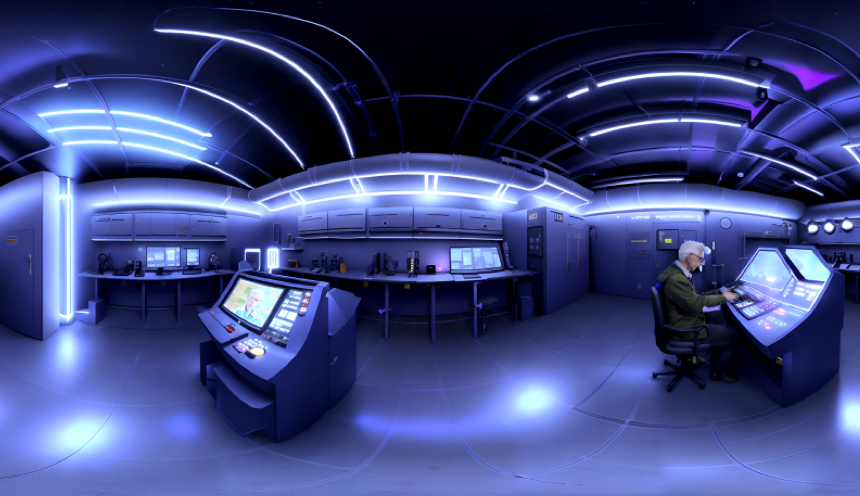
Memory Remedy: An AI-Enhanced Interactive Story Exploring Human-Robot Interaction and Companionship
Lei HAN, Yu Zhou, Qiongyan Chen, David Yip
Proceedings of the 17th International Symposium on Visual Information Communication and Interaction (VINCI 24‘) Taiwan 2024
We present an AIGC-powered, multimodal interactive storytelling experience called *Memory Remedy*. Through a flashback-based narrative, audiences gradually uncover the relationship between a robot protagonist and older adults. The story explores themes of life, memory, and post-human care, encouraging reflection on the future role of robotic companionship and the relationship between AI and humanity.
Memory Remedy: An AI-Enhanced Interactive Story Exploring Human-Robot Interaction and Companionship
Lei HAN, Yu Zhou, Qiongyan Chen, David Yip
Proceedings of the 17th International Symposium on Visual Information Communication and Interaction (VINCI 24‘) Taiwan 2024
We present an AIGC-powered, multimodal interactive storytelling experience called *Memory Remedy*. Through a flashback-based narrative, audiences gradually uncover the relationship between a robot protagonist and older adults. The story explores themes of life, memory, and post-human care, encouraging reflection on the future role of robotic companionship and the relationship between AI and humanity.
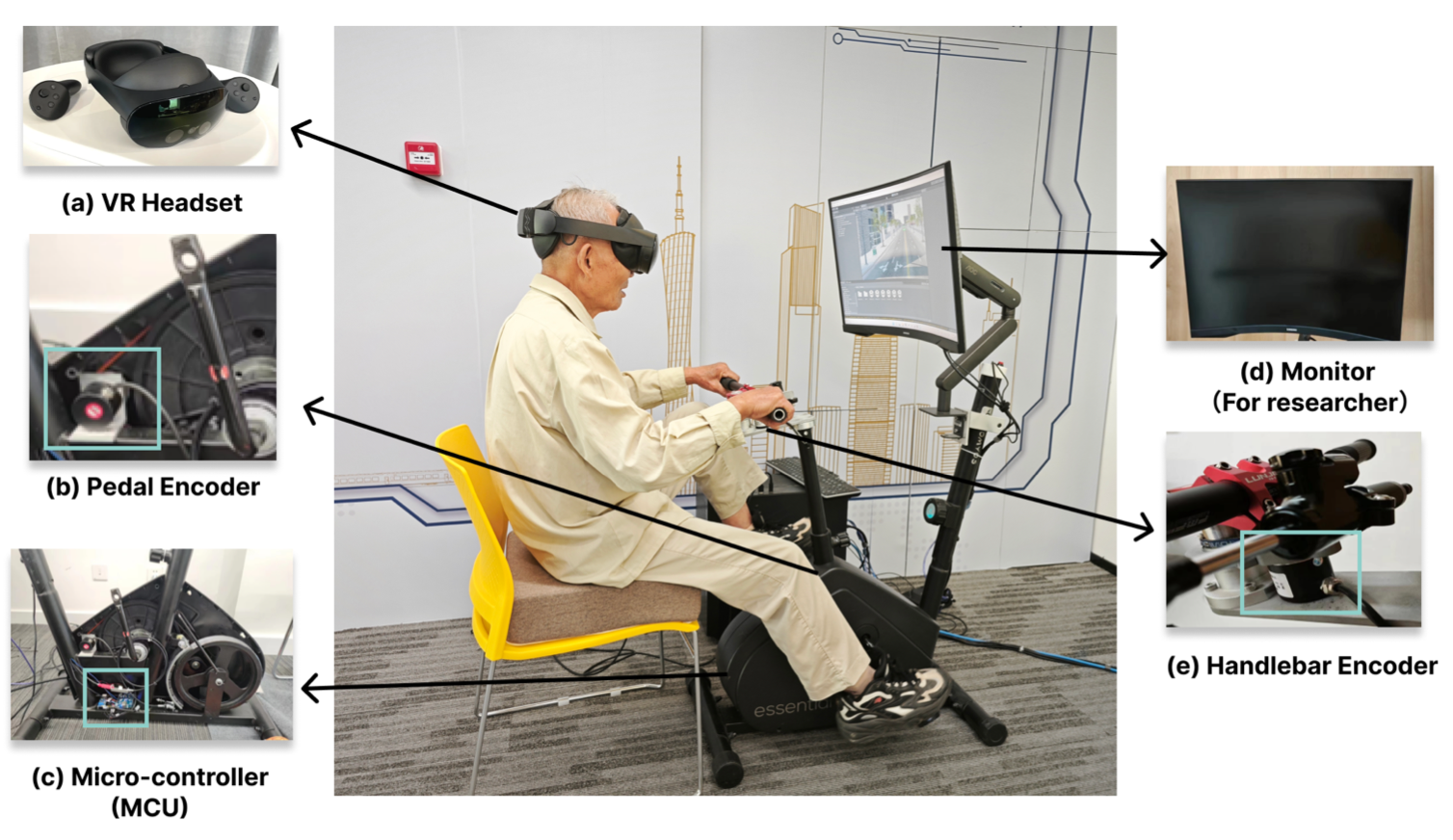
SilverCycling: exploring the impact of bike-based locomotion on spatial orientation for older adults in VR
Qiongyan Chen, Zhiqing Wu, Yucheng Liu, Lei HAN, Zisu Li, Mingming Fan
Proceedings of the ACM on Interactive, Mobile, Wearable and Ubiquitous Technologies (🇦🇺 Ubicomp 24‘) 2024
We present SilverCycling, a VR bike-based locomotion technique designed to support spatial orientation for older adults in virtual environments. To examine the impact of natural motion-based locomotion, we conducted a user study with 16 older adults comparing SilverCycling with joystick-based navigation. Results suggest that SilverCycling can improve spatial orientation and enhance user experience in open-road urban environments. Our findings provide insights and design recommendations for developing more accessible and age-friendly VR locomotion systems.
SilverCycling: exploring the impact of bike-based locomotion on spatial orientation for older adults in VR
Qiongyan Chen, Zhiqing Wu, Yucheng Liu, Lei HAN, Zisu Li, Mingming Fan
Proceedings of the ACM on Interactive, Mobile, Wearable and Ubiquitous Technologies (🇦🇺 Ubicomp 24‘) 2024
We present SilverCycling, a VR bike-based locomotion technique designed to support spatial orientation for older adults in virtual environments. To examine the impact of natural motion-based locomotion, we conducted a user study with 16 older adults comparing SilverCycling with joystick-based navigation. Results suggest that SilverCycling can improve spatial orientation and enhance user experience in open-road urban environments. Our findings provide insights and design recommendations for developing more accessible and age-friendly VR locomotion systems.
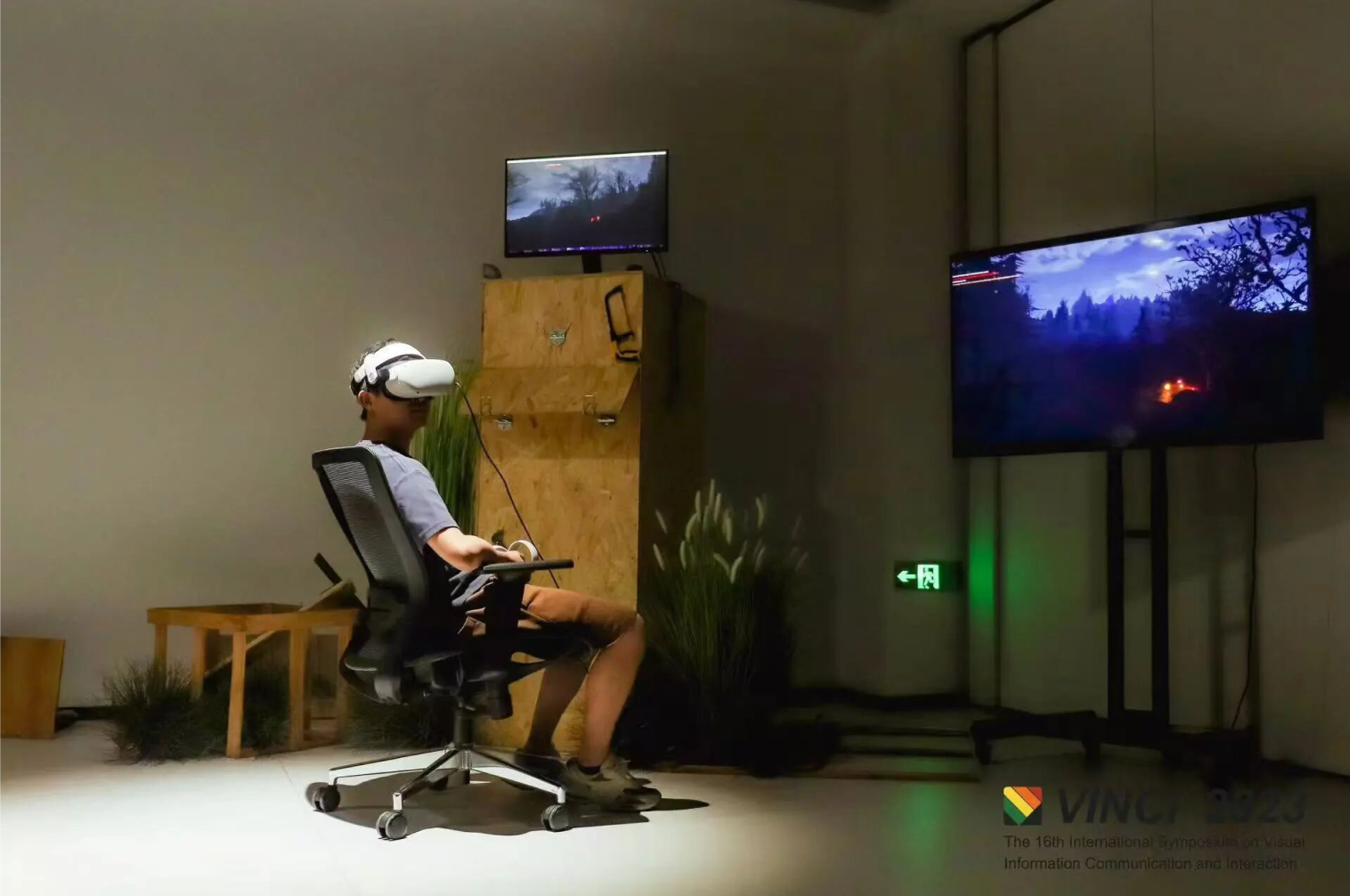
An Interactive VR Game Featuring the Story of Migrant Worker Poet in Southwest China
Mingnan We, Yu Zhou, Lei HAN
Proceedings of the 16th International Symposium on Visual Information Communication and Interaction (VINCI 23‘) 2023
This work explores the use of VR art and interactive storytelling to create an immersive narrative experience based on a poetry collection. Through a VR game, the project examines the relationship between labor and social networks in the context of technological innovation. By combining textual expression, visual effects, and empathetic storytelling, the experience connects virtual and physical worlds while demonstrating the potential of poetry-driven VR narratives.
An Interactive VR Game Featuring the Story of Migrant Worker Poet in Southwest China
Mingnan We, Yu Zhou, Lei HAN
Proceedings of the 16th International Symposium on Visual Information Communication and Interaction (VINCI 23‘) 2023
This work explores the use of VR art and interactive storytelling to create an immersive narrative experience based on a poetry collection. Through a VR game, the project examines the relationship between labor and social networks in the context of technological innovation. By combining textual expression, visual effects, and empathetic storytelling, the experience connects virtual and physical worlds while demonstrating the potential of poetry-driven VR narratives.